Piggy Care 101
Why Do Guinea Pigs Squeak? Understanding Their Sounds
Wheeking, purring, chattering, rumbling — what your guinea pig's sounds actually mean, and which ones need your attention.
November 17, 2026 · The Guinea Giggles family

Your guinea pig is a chatty roommate. Once you learn the vocabulary, you'll know exactly who's excited, who's annoyed, and who's staging a dramatic protest over late vegetables. Here's the full soundboard.
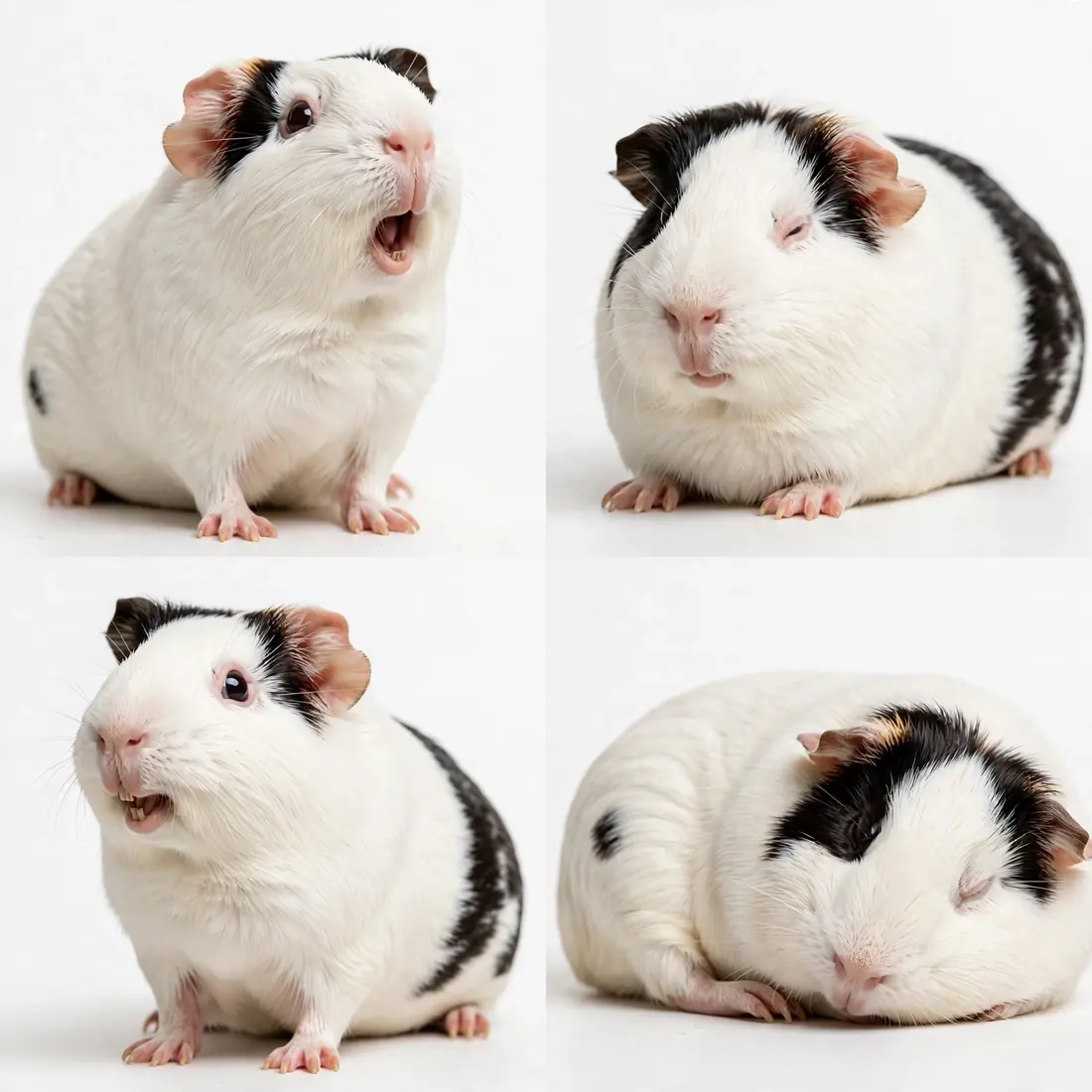
Wheeking — the dinner alarm
The loud, unmistakable "WHEEK-WHEEK!" Usually means one thing: food is expected, and it is late. Pigs learn fast — the fridge door, a plastic bag, your footsteps at 6 PM all become wheek triggers. Banana wheeks at the sound of my keys in the door. I am not sure what he expects me to carry in. He has never been right.
Your move: It's affectionate and normal. Feed on schedule and they'll wheek less frantically — a little.
Purring — read the body, not just the sound
- Deep, slow purr + relaxed, flopped body: pure contentment. This is the pig equivalent of a deep sigh on the couch.
- Shorter, higher purr + stiff body: irritation. This is the pig equivalent of "I'm listening but I don't love this."
Same sound, opposite meanings — posture is the decoder. When in doubt, stop petting and let them decide to come back.
Chutting — friendly small talk
Soft, quiet, almost muttering sounds pigs make while exploring or bumping into each other. It means they're comfortable. A cage full of chutting pigs is a happy household.
Rumbling / rumble-strutting — the swagger
A low vibration accompanied by a slow side-to-side swagger, often around another pig. This is a dominance or courtship display: "I am large, I am in charge." Completely normal in bonded pairs — it's how they maintain the pecking order without actually fighting.
Teeth chattering — the warning
Rapid tick-tick-tick sounds. This is genuine annoyance or a warning before a scuffle — most common during introductions or when one pig invades the other's hideout. Don't ignore it. If chattering escalates during an intro, separate the pigs, let them calm down, and try again later with more space.
Whining — the complaint
A high-pitched moan. Translation: "You disturbed me." Usually directed at a cage mate (or you) interrupting a nap. Harmless — give them their dignity back and step away.
Hissing — the boundary
Short, sharp hiss = irritation and personal-space enforcement. Back off, let the pig reset. It's communication, not aggression — respect it and you'll rarely see it twice.
Screaming / shrieking — the emergency
A sudden loud shriek means pain or real fear. This one is never background noise: go check your pig immediately. Common causes are a nip from a cage mate or getting a nail caught. If there's no obvious cause, or the screaming repeats, call your exotic vet.
Chirping — the mystery
Rare, bird-like, and poorly understood. Some owners report it during calm moments, others when a pig seems watchful. There's no firm consensus — file it under "guinea pigs contain mysteries."
The rule for all of it
Sound plus body language, never sound alone. A purr with a pancake-flat pig is bliss; a purr with a stiff pig is a polite warning. Learn the two together and you'll read your pigs like a book.
More illustrations
Care note: Educational information, not a diagnosis. Sudden refusal to eat, marked changes in droppings, difficulty breathing, or unusual lethargy require prompt advice from a veterinarian experienced with guinea pigs.
Enjoyed this? Get one every Wednesday
One short email every Wednesday: the week's guide, a quick tip, and what's coming Friday. Unsubscribe any time.
We email only the newsletter, and you confirm your address first. See our privacy policy.