Piggy Care 101
How Big Should a Guinea Pig Cage Really Be?
A no-nonsense floor-space guide with consistent numbers and a measuring method anyone can use.
October 7, 2026 · The Guinea Giggles family
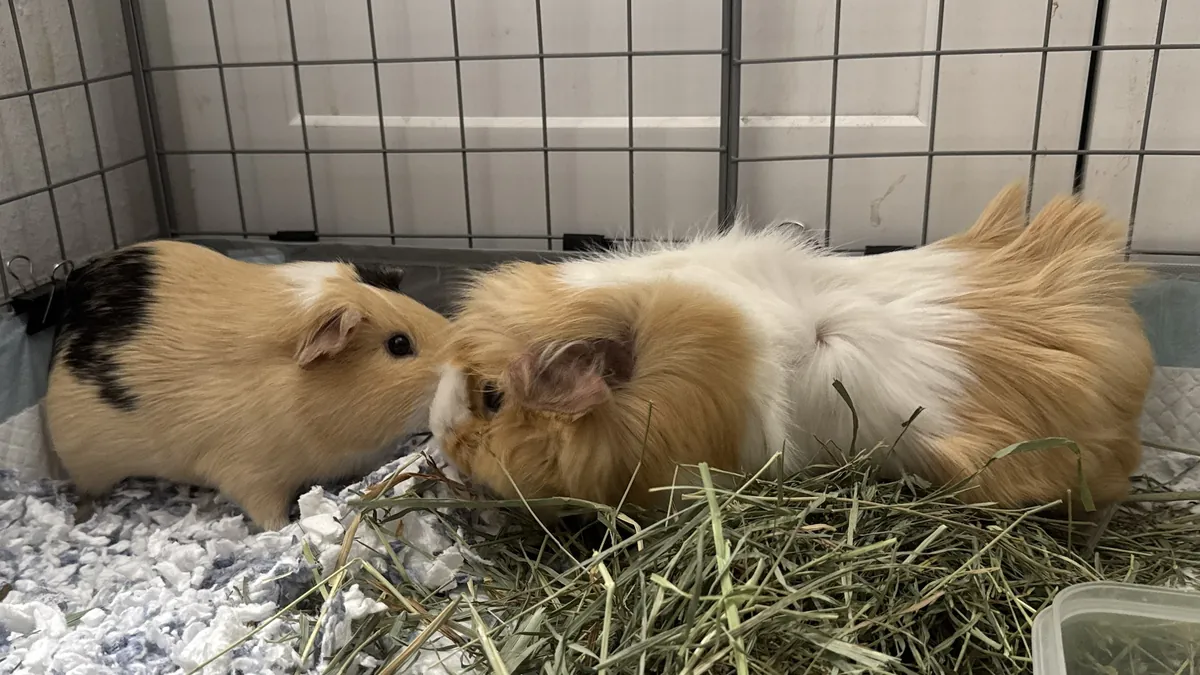
The number on the cage box matters much less than the amount of usable floor space inside. Guinea pigs need room to move horizontally, get away from one another and reach food and water without crowding.
Start with the source, not a sales label
Housing guidance varies. The Royal Veterinary College cites an RSPCA baseline of 120 x 60 cm for a pair (about 7.75 square feet). Humane World for Animals lists 7.5 square feet as a minimum for two, while preferring 10.5 square feet or more. Veterinary sources also advise increasing space as the group grows. These are different published guidelines, not one universally agreed rule.
For a typical pair, at least 10.5 square feet of usable, single-level floor area is a better planning target than shopping right down to the smallest published minimum. Give more room when possible, particularly if animals need extra separation.
A practical planning table
| Guinea pigs | Published minimum* | Better planning target* |
|---|---|---|
| 2 | 7.5-7.75 sq ft | 10.5+ sq ft |
| 3 | 10.5 sq ft | 13+ sq ft |
| 4 | 13 sq ft | Approx. 15.8+ sq ft |
*The pair minimum combines published guides with slightly different criteria; the 3- and 4-pig figures follow Humane World's recommendations. These are planning references, not substitutes for individual or rescue-specific requirements. A 30 x 76 inch floor is approximately 15.8 sq ft.
What does a 2 x 4 C&C cage mean?
C&C means storage cubes and coroplast (corrugated plastic). A 2 x 4 describes a layout of grid panels, not guaranteed interior inches. Panel dimensions, overlap and the plastic base change the finished size. Measure the clear inside floor: length in inches x width in inches / 144 = square feet. For example, 30 x 50 inches equals about 10.4 square feet.
Three design rules that matter more than a loft
- Count floor area, not upper levels. Guinea pigs are not natural climbers; a loft or steep ramp does not replace the main running area.
- Protect traffic flow. Provide multiple hideouts with escape options, separated feeding points and open paths.
- Keep feet and lungs safe. Use solid flooring, good ventilation, dry bedding and a protected location away from heat, drafts and other animals.
When in doubt, choose the larger footprint. It makes the home easier to arrange, helps companions keep personal space and gives your guinea pigs somewhere to do the important business of being guinea pigs.
Measure, don't guess
Example: 30 x 50 in = 1,500 sq in / 144 = 10.42 sq ft. Measure the internal floor, not the cage's outside footprint.
Care note: Educational information, not a diagnosis. Sudden refusal to eat, marked changes in droppings, difficulty breathing, or unusual lethargy require prompt advice from a veterinarian experienced with guinea pigs.
Enjoyed this? Get one every Wednesday
One short email every Wednesday: the week's guide, a quick tip, and what's coming Friday. Unsubscribe any time.
We email only the newsletter, and you confirm your address first. See our privacy policy.